POS operations guide
Commercial cleaning contractor site-schedule, recurring-service, supply-cost and client-balance POS workflow
Contract cleaning joins changing site specifications, recurring shifts, access windows, cleaners, consumables, quality exceptions and monthly invoices. Keep enquiry, contract version, planned shift, attendance, service evidence, supply cost, approved extra, invoice, credit and client balance separate.
Evidence and review scope
Evidence reviewed 2026-09-05. Reviewed the current Posnic stable release boundary and archived customer, sale and item models.
Stable release: v1.6.1, source commit 567a176. This page does not establish a live cleaning deployment, accepted contract, scheduled or completed shift, cleaner assignment, time sheet, site access, key custody, safety record, cleaning checklist, quality inspection, client sign-off, payroll or payment settlement. Evidence remains pinned to an archived source snapshot.
What the current evidence establishes
Client account evidence exists
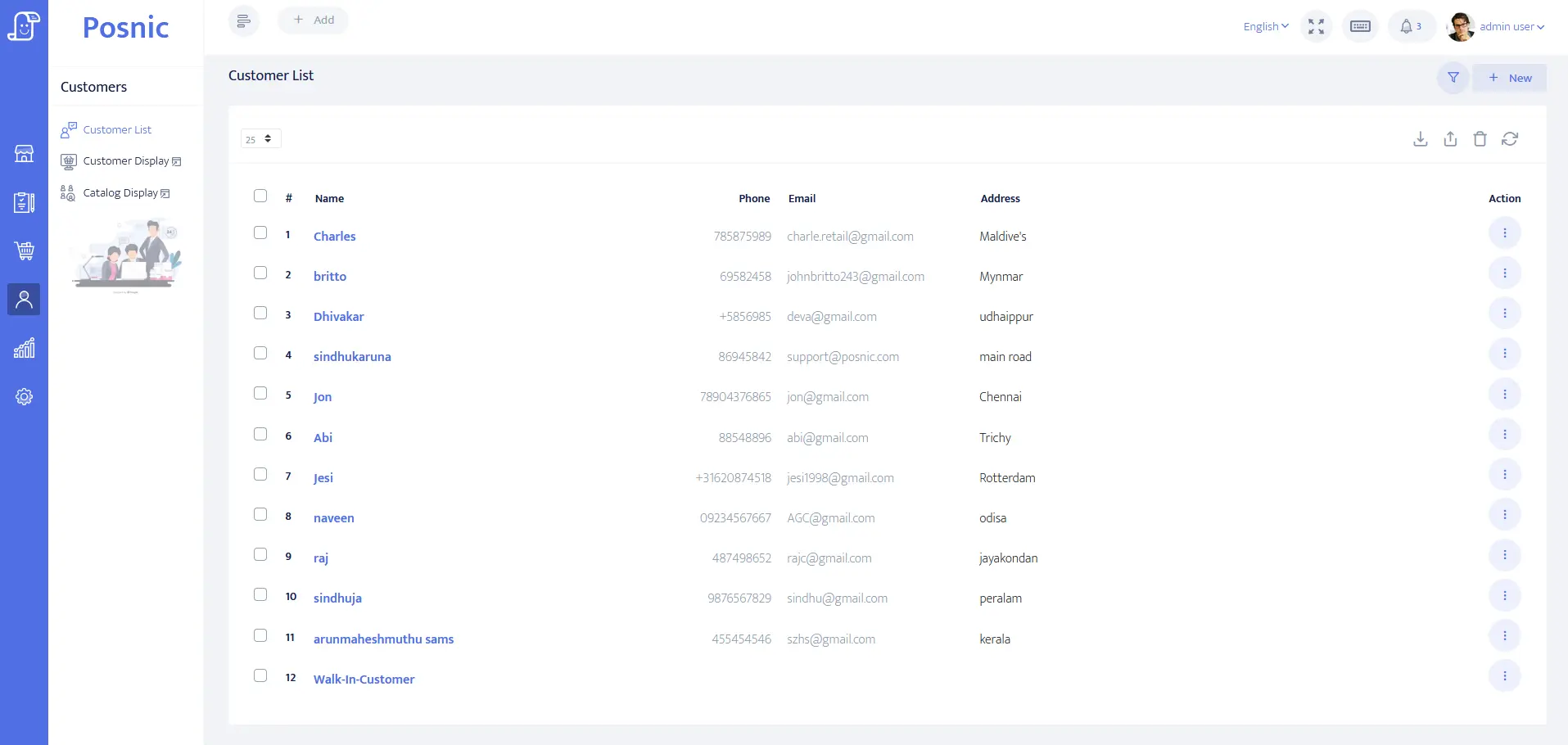
Customer identity, balance and payment-term fields can be evaluated for a site owner, tenant, agent or payer. They do not prove authority, access or contract acceptance.
Quote and payment records exist
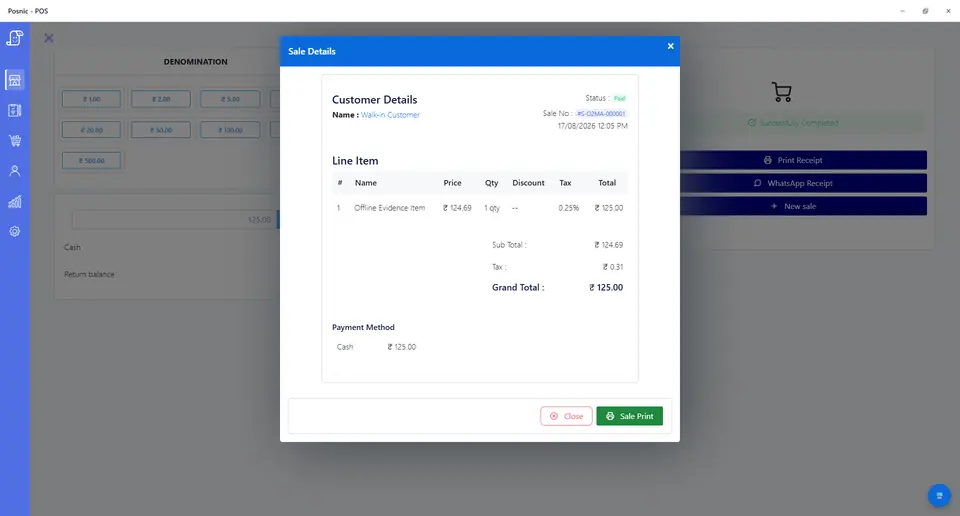
Quotation and sale lines can model recurring charges, deep cleans, extras, supplies, credits and refunds. They do not prove attendance, quality or settlement.
Item and stock evidence exists
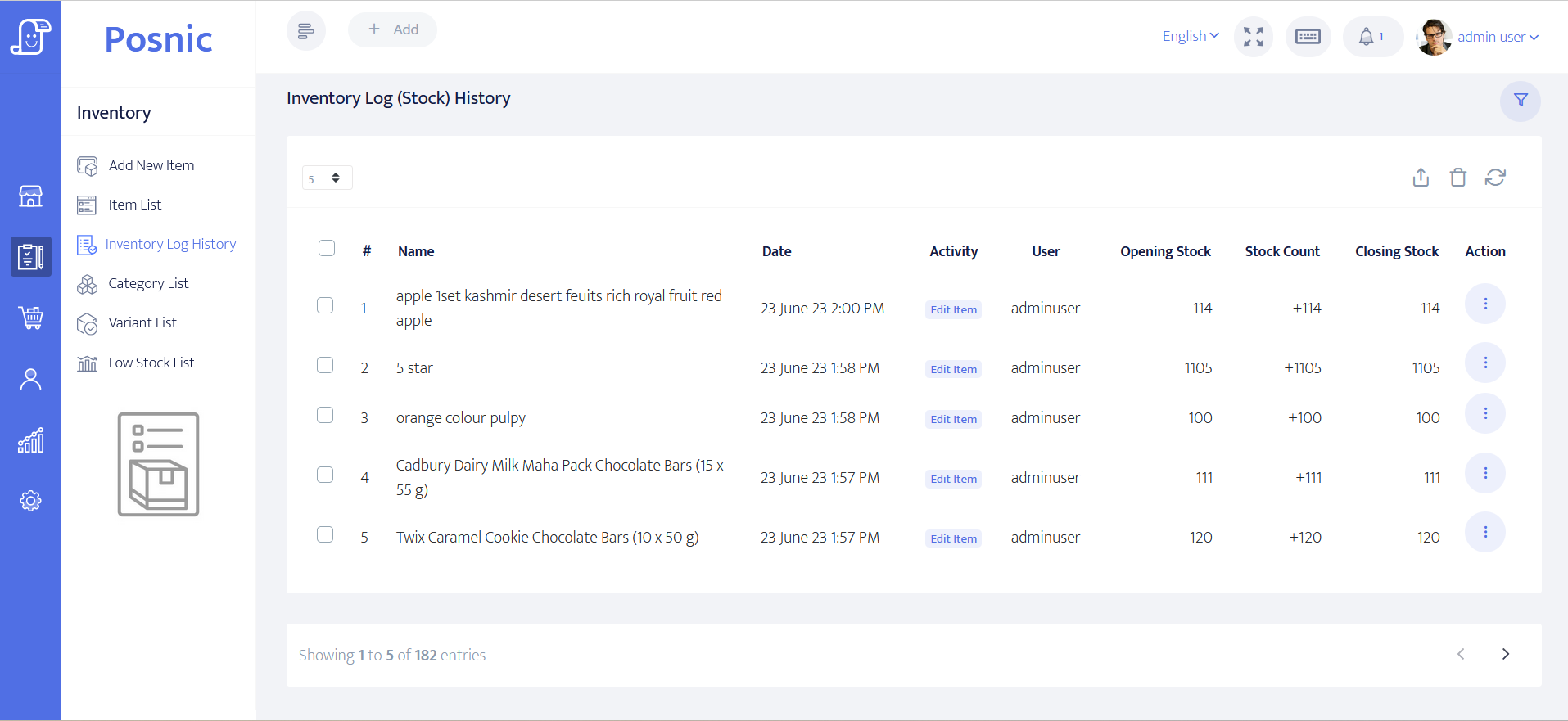
Item and stock-history paths can be inspected for controlled consumables and supplies. They do not establish cleaner custody, site use, dilution or disposal.
Cleaning controls remain operational
Rosters, attendance, keys, chemicals, safety, inspections, service proof, payroll, tax and local duties require qualified owner review.
Commercial cleaning contractor POS controls before rollout
A planned shift is not completed service, an invoice is not a quality inspection, and client payment is not attendance or safety evidence.
| Area | Record to keep | Why it matters | Acceptance check |
|---|---|---|---|
| Client, site and payer | Contracting party, premises, billing entity, contact permission, access boundary and balance. | Owner, tenant, agent and payer may differ. | Keys, alarm codes and private notes stay off receipts. |
| Site specification | Areas, tasks, frequency, service window, exclusions, standards, price, tax and version. | One generic cleaning line hides obligations. | Accepted version remains identifiable. |
| Recurring schedule | Service period, planned date, shift reference, responsible owner and billing rule. | Planned, assigned and completed are distinct. | No invoice is raised from schedule alone. |
| Cleaner assignment | Shift owner, required skills, induction boundary, team size and assignment state. | Assignment does not prove attendance. | POS does not impersonate a roster. |
| Attendance and service | Arrival, departure, completed areas, checklist, photo, incident and sign-off references. | A sale line cannot prove site activity. | Operational evidence remains linked, not invented. |
| Recurring charge | Invoice period, included shifts, contract rate, allowance, tax and work references. | Billing needs traceable contract support. | Charge reconciles to accepted terms. |
| Extra work | Request, scope, estimate, authority, labour, supplies, agreed price and status. | Ad hoc work can sit outside the contract. | Approval precedes billing. |
| Supply cost | Allowance, issue, supplier commitment, actual cost, freight, return and waste. | Estimated and actual cost affect margin differently. | Cost changes retain history. |
| Client supply charge | Included, pass-through, markup or fixed-price method, quantity and approved price. | Cost and client price are not interchangeable. | Pricing rule is explicit. |
| Quality exception | Missed area, complaint, failed inspection, re-clean, credit, owner and resolution. | Service exceptions alter obligations and margin. | Original shift remains visible. |
| Cancellation and refund | Notice, failed access, cancelled shift, fee decision, credit, refund and owner. | Every value movement needs its basis. | Original transaction remains visible. |
| Owner review | Planned, open and evidenced shifts; sales, receivables, supplies, credits and margin. | Cash and service obligations diverge. | Money and open commitments close together. |
Practical workflow
Version each site promise
Retain every accepted specification by area, task, frequency, window, standard, allowance and price.
Separate shift states
Keep planned, assigned, attended, evidenced, inspected, accepted and billed states distinct.
Protect contract margin
Track included labour, extra work, supply allowance, actual cost, client charge, re-cleans and credits.
Close exceptions with finance
Review missed shifts, failed access, complaints and unpaid invoices beside remaining service obligations.
Cleaning enquiry-to-payment flow
Survey and quote
Capture client, site, areas, tasks, frequencies, exclusions and access boundary.
Accept and schedule
Confirm the specification, service period, recurring price and shift references.
Link service evidence
Keep attendance, checklists, photos, incidents and sign-off outside the sale record.
Build the invoice
Reconcile included shifts, extras, supplies, tax, credits and approval.
Collect and reconcile
Close payment, client balance, supply cost, quality exceptions and open work together.
Hardware, software and data setup
Hardware
- Office computer or tablet and quote or receipt printer.
- Site device only after connectivity, privacy and offline fallback review.
- Barcode scanner only for controlled supplies and consumables.
- Payment terminal without storing card data in POS.
- Off-device backup for client, contract, cost and payment records.
Software and data
- Client accounts with minimum necessary billing and premises data.
- Recurring-service, extra-work, labour, supply, credit and refund items.
- Separate quoted, accepted, planned, assigned, attended, evidenced, inspected, invoiced and paid states.
- Reports for client balances, open service, supply costs, credits and margin.
- Export and restore workflow before real site data is imported.
Setup sequence
- Write contract, scheduling, extra-work, invoicing, failed-access, complaint and credit rules.
- Create synthetic clients, sites, payers, services, cleaners, supplies and payment labels.
- Version one site specification and create recurring shift references.
- Assign a shift without treating assignment as attendance or completion.
- Test included service, approved extra work, supply issue, actual cost and client charge.
- Test failed access, missed area, re-clean, failed payment, cancellation and credit.
- Keep attendance, checklist and inspection evidence separate from POS sale and payment status.
- Reconcile recurring invoices, client receipts, supply costs, credits, open service and margin.
- Back up and restore records, then obtain operations, finance, safety, payment, privacy and local approval.
Product evidence to inspect
Mistakes to avoid
- Treating a planned or assigned shift as proof of attendance or completed cleaning.
- Combining included service, extras, supply cost and client price into one value.
- Overwriting specification versions, shift states, approvals or complaint history.
- Billing every planned shift without completion and exception review.
- Using POS records as rostering, key custody, safety evidence or quality certification.
- Putting keys, alarm codes, occupant details or private site notes on receipts.
- Importing real client data before backup and restore pass.
Use the blank commercial cleaning contractor POS acceptance record
The CSV keeps 24 controls blank until the exact workflow is tested, including contracts, schedules, shifts, attendance boundaries, supplies, extras, invoices, complaints, credits and restore.
Primary sources used
Current stable release
Pinned source tree
Customer model
Sale model
Item model
PCI SSC merchant process
Questions
Is POS cleaning workforce software?
No. Rosters, attendance, lone-worker safety, keys, inspections, proof of service and payroll need separate controls.
How should recurring cleaning be billed?
Keep site specification, service period, shift evidence, included allowance, extras, invoice and payment status distinct.
How should supplies be tracked?
Keep allowance, issue, actual cost, client charge, return, waste and tax treatment auditable.
Can an invoice prove a shift was completed?
No. Attendance, cleaned areas, checklist results, photos, incidents and sign-off remain separate.
Where does Posnic fit?
Archived evidence can be evaluated for accounts, quotations, sales, payments, items and reports. It does not prove scheduling, attendance or a live rollout.
Where Posnic fits
Posnic Community Edition can be evaluated for cleaning-office quotations, client accounts, service and supply items, payment labels, controlled stock, credits and reports. Keep contracts, scheduling, rostering, attendance, site access, keys, chemical safety, quality inspection, completion evidence and payroll outside scope until the workflow passes the blank record. Posnic Cloud helps only when the contractor needs remote dashboard access, managed backup, multi-office visibility or scoped custom work.