Textile and garment retail evaluation
Textile POS for exact size, colour and barcode checks
Test whether one scan identifies the exact sellable garment, updates the right stock record and survives an exchange or return.
Need to verify implementation details first? Inspect product evidence.

Evidence and review scope
Evidence reviewed 2026-08-18. The review used archived Posnic evidence snapshots, 1,478 focused variant, item and stock tests, pinned product documentation, source inspection and primary barcode and textile-labelling references.
Stable release: v1.9.0. No complete textile or garment shop day, physical scanner, label printer, fabric-cut workflow, exchange, branch synchronization, tax acceptance or textile manufacturing workflow was executed.
What Posnic archived evidence actually establishes
A named variant model exists
The pinned API model stores a variant name and an array of allowed values. This supports a controlled attribute such as size or colour, but the model alone does not prove every textile catalogue pattern.
The current item screen selects one variant definition
The reviewed item form exposes one selected variant definition and multiple values. It does not establish a native size-by-colour matrix where two dimensions are combined automatically.
Selected values become separate item records
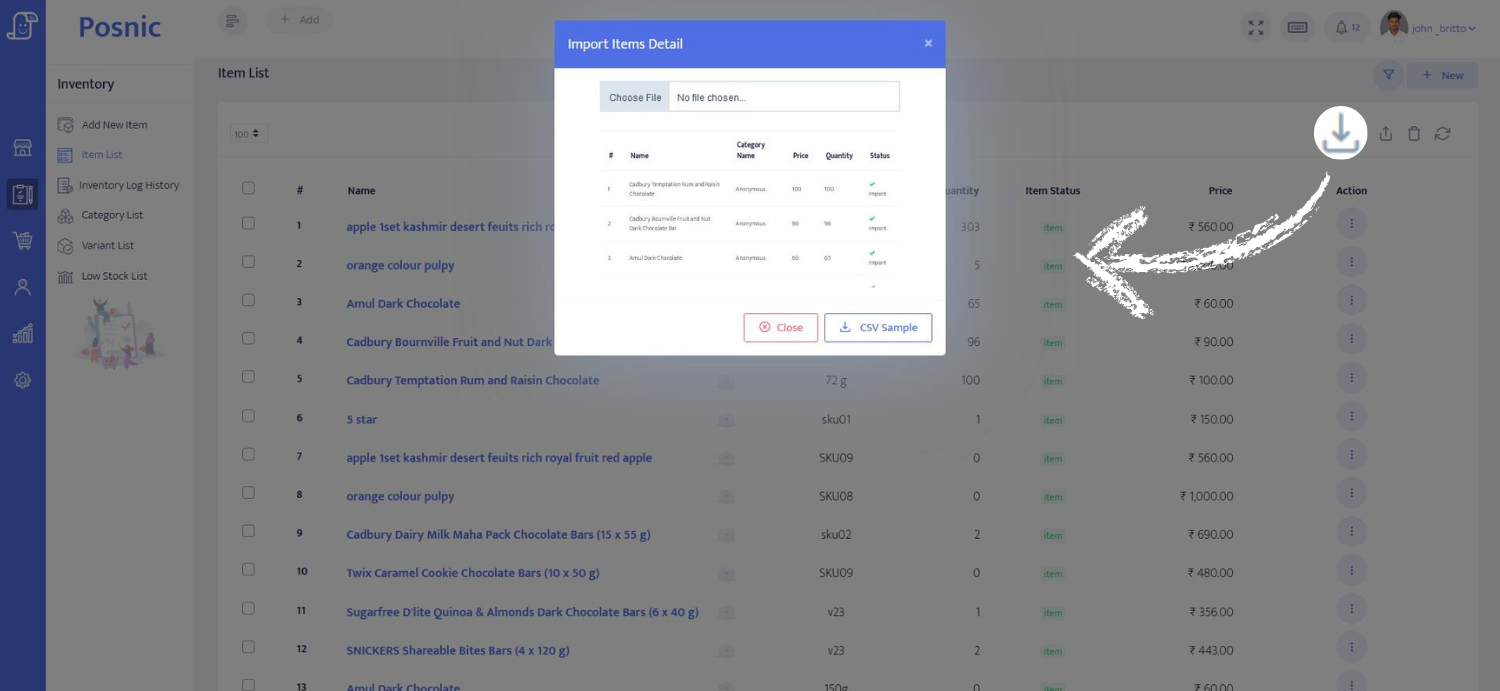
The pinned item script expands chosen values into separate names and exposes SKU, barcode, MRP, selling price, quantity, unit and discount fields for each generated record. A shop still needs a naming and identity rule that survives imports and returns.
Core item and stock fields exist
The item model contains barcode, SKU, category, supplier, branch, quantity, cost, selling price, tax, unit and inventory-related fields. Presence in source is a testable boundary, not evidence that a real textile day reconciled.
1,478 focused source tests passed
Nineteen API model, repository, service, controller, route and validation suites for variants, items and stock logs passed with zero failures. They are source-level checks and did not run a showroom catalogue or physical counter.
Label printing remains unaccepted
The item script contains a label preview and browser-print path, while the pinned hardware matrix says label printers are not implemented. The safer public conclusion is that label printing is an open requirement until a release and device pass acceptance.
Define the sellable stock unit before choosing software
For externally identified products, GS1 says each style, colour and size variation is a unique product and should have its own GTIN. Even when a small shop uses internal SKUs instead of GTINs, the operational lesson is the same: the code at the counter must identify one unambiguous stock unit.
Ready-made garment
A practical identity may include design, colour and size. For example, SHIRT-104 / NAVY / M must not silently share stock with NAVY / L or WHITE / M.
Saree or one-piece item
A design, colourway, material, supplier reference or unique piece code may be the sale unit. Decide whether visually similar pieces can share one stock record.
Fabric sold by length
The unit may be metre, yard or another accepted measure. Test decimal precision, cut quantity, remaining roll length, price calculation, receipt display and returns.
Set or pack
A uniform set, multipack or coordinated outfit needs a written rule: one sellable pack, component stock, or both. Do not infer automatic kit behavior from ordinary item fields.
Altered or reserved item
Separate sellable stock from alteration, reservation, damage and customer-held states. No dedicated alteration lifecycle was established in this Posnic review.
Branch-held item
Define which branch owns the stock, how transfers are approved and what happens during a synchronization conflict. A branch field is not proof of an accepted transfer process.
Size, colour and barcode acceptance matrix
Create a small reference catalogue, predict every result, then compare item records, receipts, stock logs and exports. Keep the evidence for failures as carefully as the passes.
| Test | Expected business result | Evidence to retain |
|---|---|---|
| One design, one attribute | Create size values S, M and L under one controlled variant definition. | Item IDs, generated names, values and duplicate checks. |
| Size and colour together | Represent NAVY / M and WHITE / M without ambiguity or shared quantity. | The actual catalogue method; record a gap if two dimensions require manual item creation. |
| SKU uniqueness | Reject or flag a duplicate internal SKU according to the accepted policy. | Input, validation response, saved records and corrective action. |
| Barcode uniqueness | One scan resolves to one sellable stock unit. | Symbology, encoded value, matched item and duplicate or damaged-label result. |
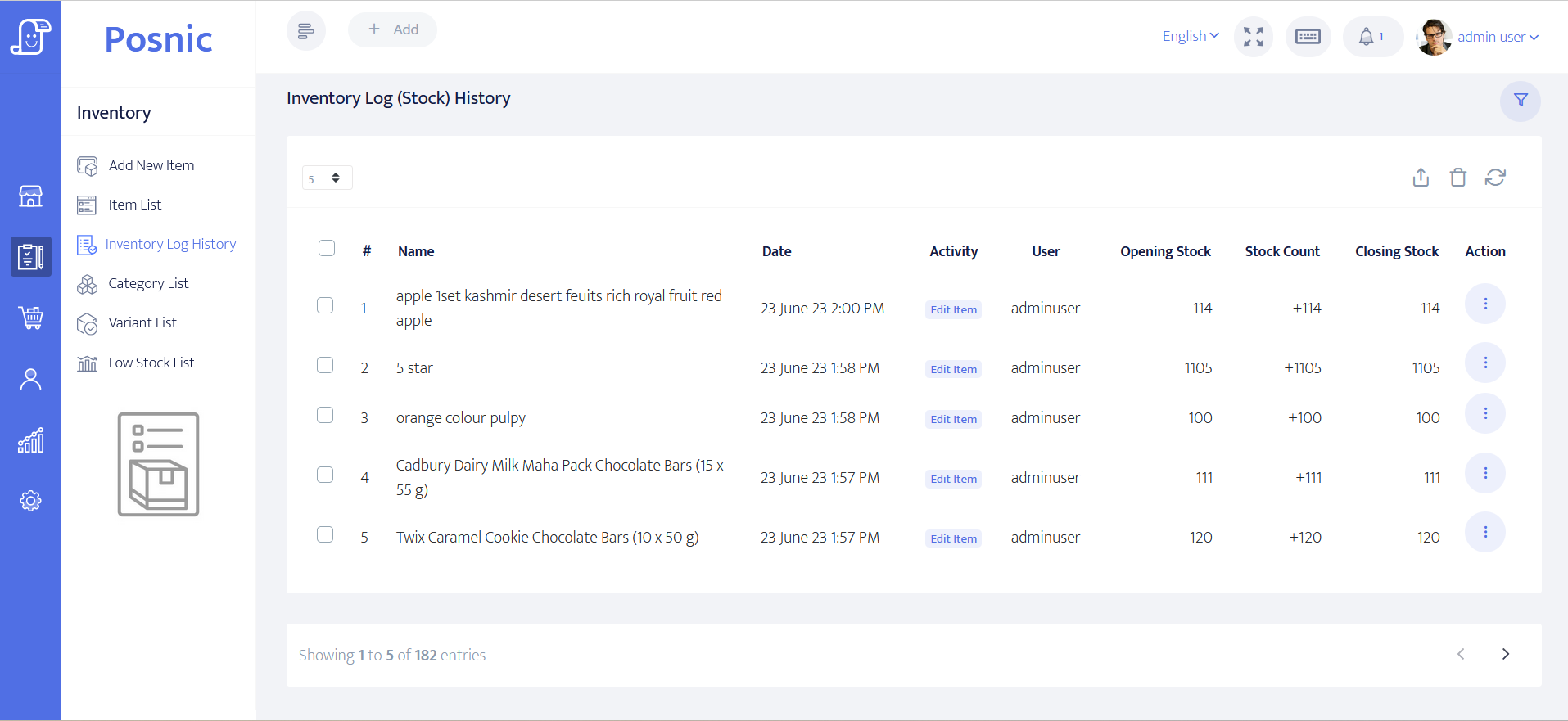
| Receiving | Add known quantities to the exact variants received from a supplier. | Purchase reference, before and after quantity, stock-log record and user. |
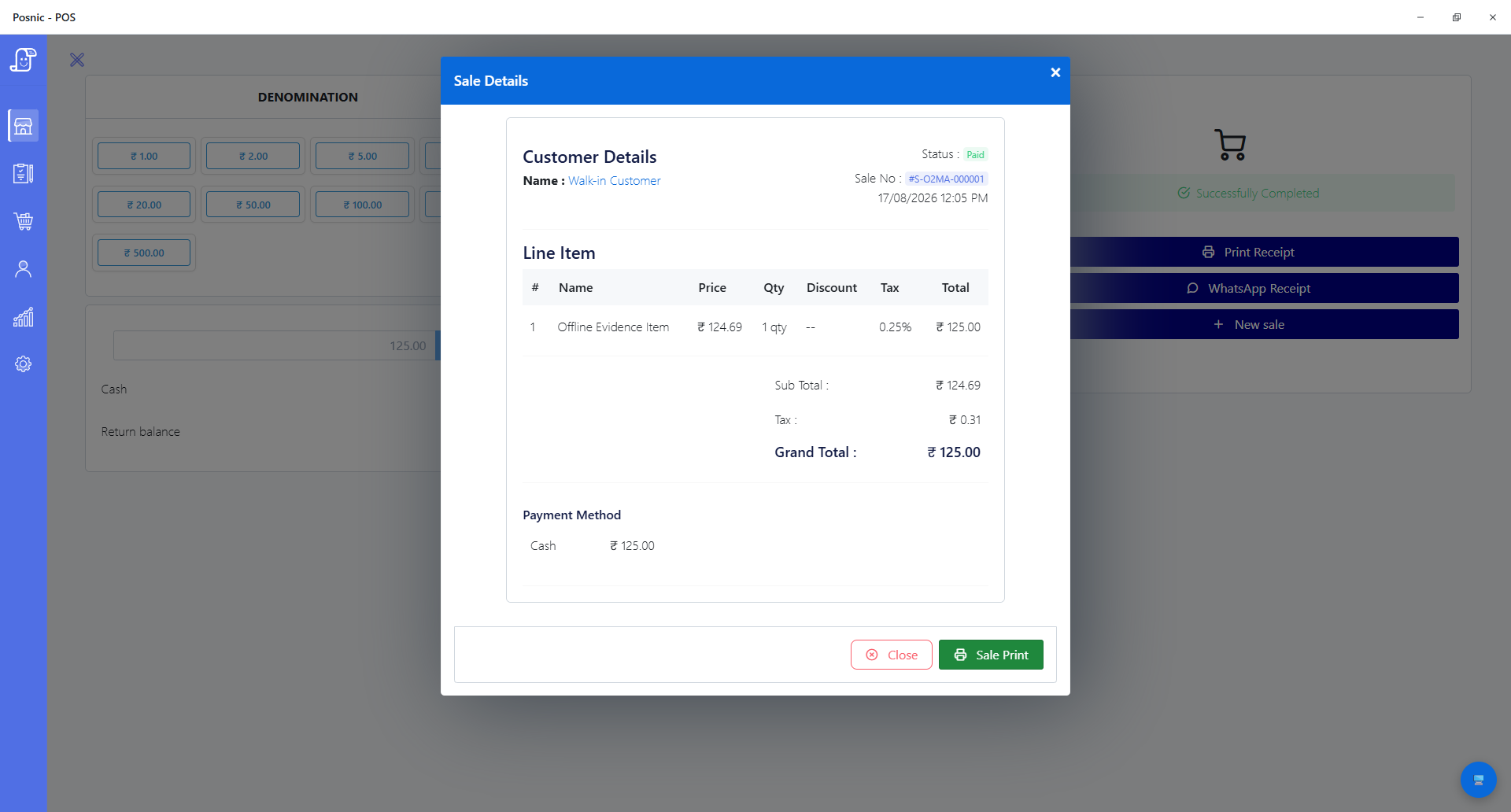
| Sale and discount | Reduce the exact variant once and apply only the approved price or promotion. | Sale ID, item ID, quantity, price, discount, tax, receipt and stock result. |
| Size exchange | Return the original size and sell the replacement without losing value or stock traceability. | Both item IDs, return and sale references, payment difference and resulting quantities. |
| Return or damage | Place returned sellable and damaged stock into the correct state. | Reason, approval, stock location, value effect and audit log. |
| Count variance | Explain a known shortage or excess without silently overwriting history. | Count sheet, expected and actual quantity, adjustment reason, approver and stock log. |
| Branch and outage | Preserve sale identity and stock ownership through a defined disconnection and recovery case. | Precondition, timestamps, branch IDs, conflict result, reconciliation and recovery approval. |
Retail billing and textile manufacturing are different systems
This page covers shop-floor retail questions
- Item, design, size, colour, SKU and barcode identity.
- Supplier receiving, counter sale, discount, exchange and return.
- Stock quantity, count variance, damage, branch and reporting checks.
- Receipt, tax and product-labelling outputs that the business must accept locally.
This review does not establish manufacturing ERP
- Yarn, fibre, fabric or dye-lot traceability.
- Bill of materials, loom, knitting, dyeing, cutting or production planning.
- Work orders, job work, subcontracting, quality inspection or wastage yield.
- Factory costing, shipment planning, export documentation or compliance certification.
Intent boundary: searches for textile manufacturing billing or textile ERP need production evidence. Posnic should not rank for those terms by relabelling a retail stock page as manufacturing software.
A ten-step textile POS pilot
Use a representative set of real products and approved test data. Do not migrate the full catalogue until the reference set reconciles.
Name each stock state
Define sellable, reserved, alteration, damaged, return-to-supplier and customer-return states.
Design the item identity
Choose the fields and naming order for design, material, colour, size, supplier and season.
Build a reference catalogue
Include a garment family, a saree or piece item, a set, a measured item and a damaged item.
Assign SKU and barcode policy
Document uniqueness, source, label owner, symbology and what staff do when a label fails.
Receive known quantities
Record supplier, branch, cost, price, tax, quantity and stock-log expectations before entry.
Run counter cases
Sell by search and scan, apply an approved promotion, and inspect receipt and inventory results.
Exchange and return
Exchange a size, return a normal item and record a damaged item with named approval.
Count and reconcile
Count the reference stock, explain every variance and match item, sale and stock-log records.
Test outage, branch and restore
Use the planned topology, preserve timestamps and verify conflicts, recovery and restored quantities.
Approve gaps and rollout
Assign an owner and due date to every gap, then obtain cashier, stock, accounts and owner sign-off.
Product screens worth inspecting
These are real Posnic screens, shown in full rather than cropped as decorative proof. They demonstrate inspectable surfaces, not a completed textile acceptance run.
Barcode and label decisions
Decide who owns the identifier
Use an existing supplier identifier only when it identifies the exact sellable unit and the shop is authorized to rely on it. Otherwise define an internal SKU or obtain identifiers through the applicable GS1 organization.
Do not invent GTINs
GS1's implementation path begins with obtaining a company prefix or licensed identifiers. Internal codes can serve internal workflows, but they must not be presented as globally valid GTINs.
Test the data carrier and scanner together
Record barcode type, print dimensions, material, contrast, curvature, scanner interface and encoded value. Test normal, duplicated, folded, faded and damaged labels at the real counter.
Keep label printing as a release gate
The pinned Posnic hardware matrix states that label printers are not implemented. A preview or browser print path is not enough to promise a textile tag workflow.
Tax, invoice and textile-labelling boundary
Billing software does not make a textile business compliant by itself. Product description, fibre composition, size, price, tax, country of origin and package declarations depend on the product, market, sale type and current law.
India garment declarations
India's Department of Consumer Affairs publishes a garment-specific 2022 amendment under the Legal Metrology packaged-commodities framework. Use the official text and qualified local advice to determine which declarations apply.
European Union fibre labelling
EU Regulation 1007/2011 addresses textile fibre names and related labelling and marking. It is a legal source to review, not a claim that Posnic generates compliant labels.
Acceptance belongs to the seller
Test the exact invoice, receipt, tag and export against current requirements for every country of sale. Record the reviewer, date, sample and accepted release.
Run the 22-record textile and garment checklist
The worksheet covers release identity, catalogue structure, variants, barcode, labels, receiving, measured stock, sale, exchange, return, count, branch, reports, outage, restore, compliance and the manufacturing boundary. Observation and decision cells are blank so the file cannot imply that a test passed.
Primary product and standards sources
Posnic variant model
Pinned source for a variant name and allowed values.
Posnic item form
Pinned interface showing one selected variant definition and multiple variant values.
Posnic item script
Pinned source for value expansion, item fields, label preview and browser-print paths.
Posnic item model
Pinned source for barcode, SKU, category, supplier, branch, quantity, price, tax, unit and inventory-related fields.
Posnic hardware matrix
Pinned support levels for scanners and the explicit statement that item labels are not implemented.
GS1 variant decision rule
Official guidance that each style, colour and size variation is a unique product for GTIN assignment.
GS1 barcode implementation
Official steps covering identifier licensing, number assignment, printing, placement and verification.
India garment amendment
Official Department of Consumer Affairs page for the 2022 garment-specific Legal Metrology amendment.
EU textile fibre regulation
Official EUR-Lex text for Regulation 1007/2011 on textile fibre names and related labelling and marking.
Questions
Can archived Posnic evidence track both size and colour for one garment?
The reviewed interface selects one variant definition and can create separate items from multiple values. It did not establish a native two-dimensional size-by-colour matrix, so a shop must test its exact catalogue structure before rollout.
Does the archived Posnic evidence print textile barcode labels?
No accepted label-printer capability is claimed. Barcode and SKU fields plus a browser print-preview path exist in source, but the pinned hardware matrix says item labels are not implemented. Treat label printing as an open requirement.
Can a barcode scanner be used with Posnic?
The pinned hardware matrix describes keyboard-wedge scanners as supported by standard input behavior. No physical scanner model was connected in this evidence review, so test the exact scanner, symbology and damaged-label cases.
Is Posnic textile manufacturing ERP software?
No textile manufacturing workflow was established. Yarn or fabric lots, BOM, loom, dyeing, cutting, work orders, job work, quality and shipment planning require separate evaluation.
Can Posnic manage fabric sold by length?
The item model and existing tests contain quantity and unit behavior, but no complete fabric-cut sale and return was executed. Test decimal precision, remaining length, pricing, receipt and return rules with real sample rolls.
Can Posnic combine multiple textile showrooms?
Branch and cloud-related source paths exist, but no real textile branch synchronization, transfer, conflict, reconnect or failover workflow was accepted. Test those cases before relying on a consolidated view.
What should a garment shop test before choosing billing software?
Test product identity, size and colour representation, SKU and barcode uniqueness, receiving, sale, discount, exchange, return, stock count, branch behavior, outage recovery, restore and applicable tax and labelling outputs.
Where Posnic fits today
Posnic Community Edition archived evidence run has inspectable item, variant and stock source plus 1,478 passing focused tests. The reviewed interface uses a single selected variant definition, label printers are not implemented in the pinned hardware matrix, and no complete textile or garment shop day was accepted. Use the worksheet to decide whether the current release fits a small controlled pilot.